
















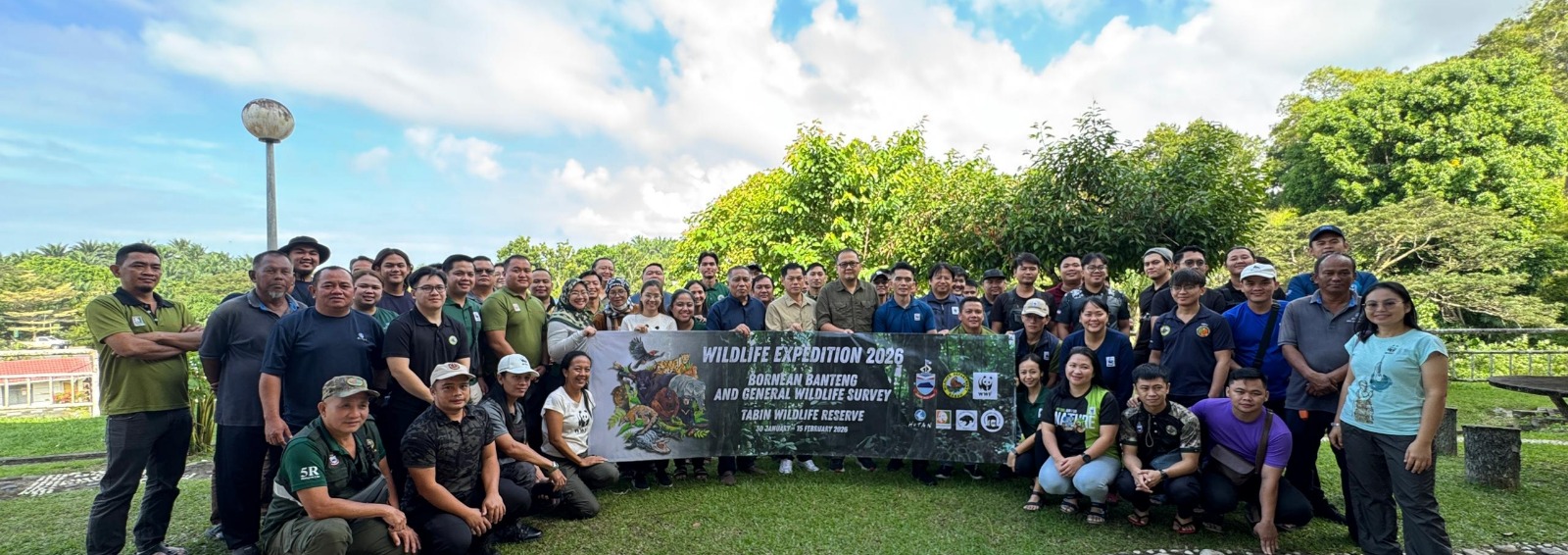
A two-week wildlife expedition has begun in Tabin Wildlife Reserve to strengthen protection of the critically endangered Bornean banteng and improve understanding of wildlife in the area.
Led by the Sabah Wildlife Department (SWD) in collaboration with WWF-Malaysia, and supported by the Sabah Forestry Department, HUTAN, UK Appeal, Bornean Sun Bear Conservation Centre (BSBCC), Danau Girang Field Centre and Tabin Wildlife Resort, the expedition focuses on gathering updated data on banteng populations in central Tabin, where information remains limited.
Survey findings will support conservation planning and on-ground wildlife management, contributing to the Bornean Banteng Action Plan 2019–2028 and management plans for Tabin Wildlife Reserve and Silabukan Forest Reserve.
A 58-member team completed preparatory training in Lahad Datu before entering the forest for the 14-day deployment. Activities include deploying camera traps, conducting general wildlife surveys, threat assessments, orangutan surveys and bird mist-netting.
Tabin Wildlife Reserve, covering about 122,500 hectares, was gazetted in 1984 primarily to protect large mammals and remains one of eastern Sabah’s key conservation landscapes.
“Tabin was established to safeguard wildlife, especially large mammals. That is why SWD maintains a presence in Tabin as the state-mandated authority responsible for managing and conserving wildlife in Sabah,” said SWD director Mohd Soffian Abu Bakar.
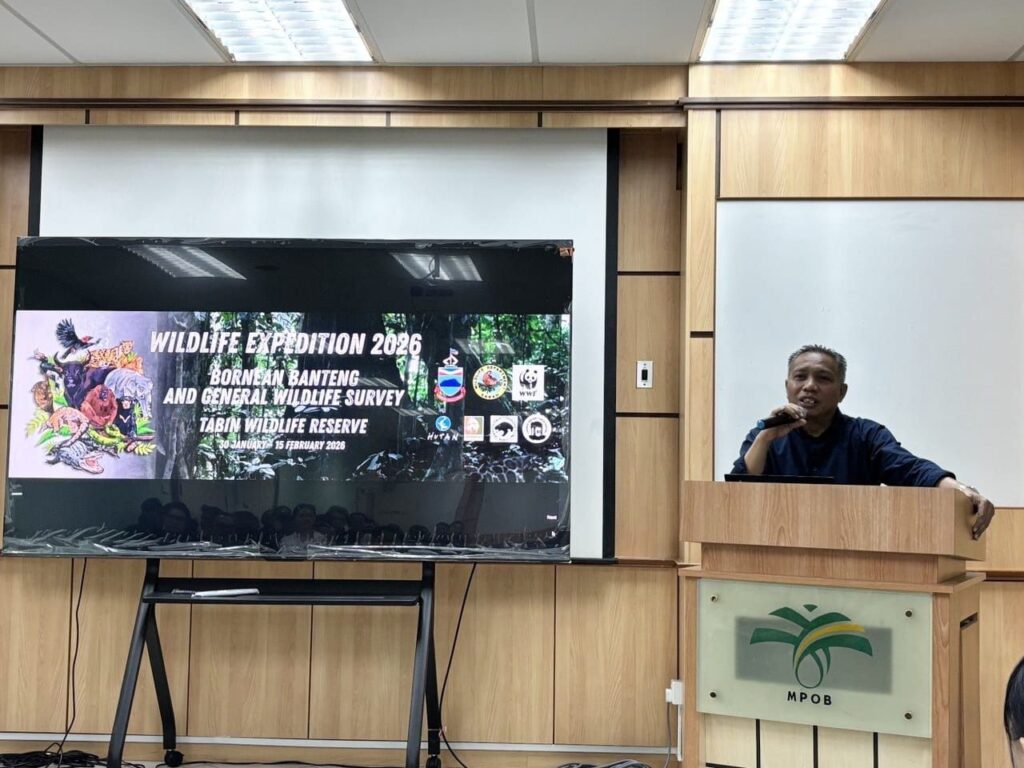
He said the last comprehensive expedition in Tabin was conducted in 2009, making updated scientific data critical for effective wildlife management.
Beyond research, the expedition also strengthens conservation capacity by providing field exposure for new rangers and facilitating knowledge sharing among participating organisations.
“This expedition is a vital initiative to strengthen our understanding of Sabah’s wildlife,” said Dr Robecca Jumin, Head of Conservation, WWF-Malaysia (Sabah), adding that data gathered will guide conservation planning and long-term species protection.