

















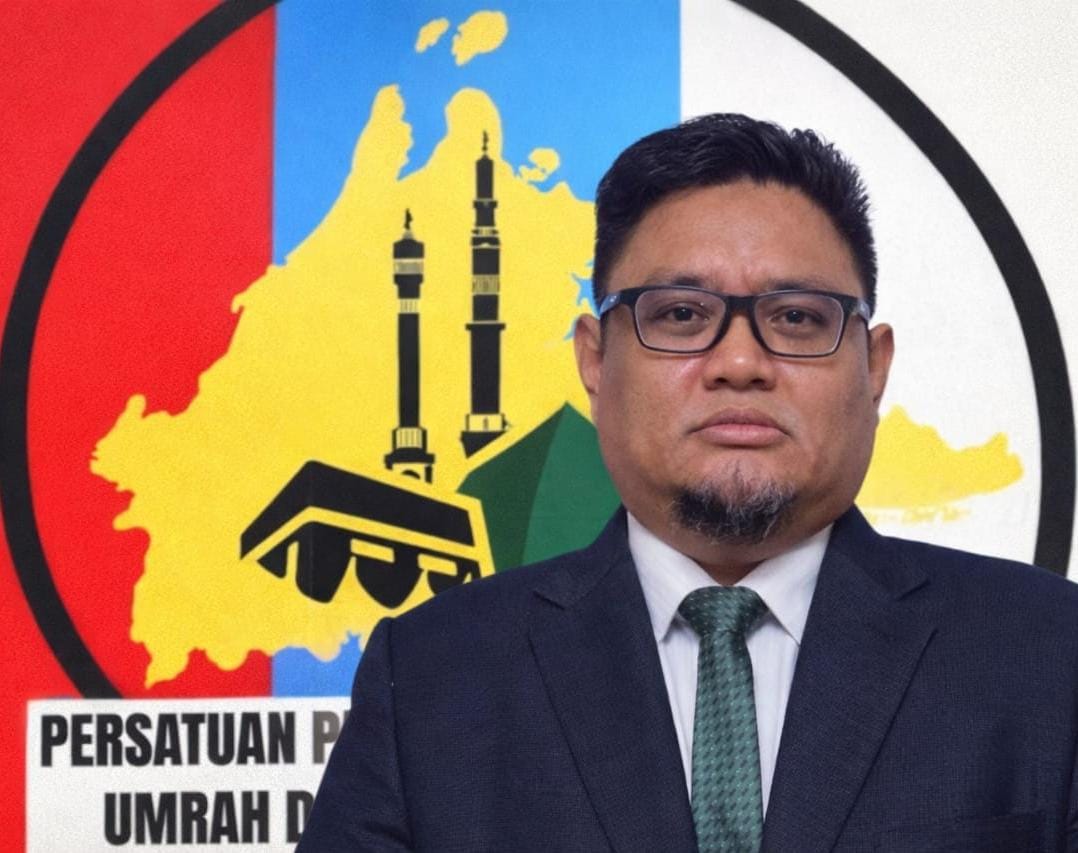
The Sabah Umrah and Hajj Agencies Association (PAUHS) views seriously the implementation of a RM250,000 bank guarantee as a requirement for the renewal of umrah agency licences.
“We respect the government’s intention to strengthen industry governance, enhance integrity, and ensure comprehensive protection for pilgrims.
“We fully support firm action against any agency involved in fraud, breach of trust, or failure to fulfil obligations to customers.
“Licence suspension, heavy penalties and blacklisting should be enforced without compromise to ensure that only credible operators remain in the industry,” said PAUHS president Nor Azmi Abi Shafian.
This follows an announcement by the Ministry of Tourism, Arts and Culture (Motac) that the new requirement will take effect on May 15, 2026, and will apply to umrah and outbound travel agencies.
However, Azmi said the blanket implementation of a high bank guarantee requirement raises serious concerns about balance and the long-term sustainability of the umrah industry ecosystem, particularly in Sabah and Sarawak.
“This approach risks creating an industry structure increasingly dominated by large, well-capitalised players, limiting opportunities for small and medium-sized operators who have long operated ethically and played an important role in widening access for the public to perform umrah.
“If not reviewed promptly, this policy may shape a less competitive industry landscape, where capital strength becomes the main determinant of survival rather than integrity or service quality.
“Such a situation could weaken market dynamics and erode the entrepreneurial spirit among local operators,” he said.
Azmi emphasised that, based on industry observations, reported cases of umrah fraud more frequently involve agencies based in Peninsular Malaysia, while cases involving operators from Sabah and Sarawak are rare.
Therefore, he said, a blanket policy that does not take differing risk patterns into account may create perceptions of unfairness and impose a disproportionate burden on Borneo-based operators.
“Effective regulation should be strategic and targeted, focusing on high-risk parties rather than producing broad effects that also pressure agencies with good track records,” he said.
In this context, he said existing approaches should be refined so that consumer protection objectives are met without undermining the viability of compliant industry players.
Accordingly, he said PAUHS views that the requirement should be comprehensively reviewed and implemented through a more balanced approach to avoid unintended long-term impacts on the industry structure.
A robust policy, he added, must not only be firm but also fair, practical and reflective of operational realities on the ground.
To ensure such balance, PAUHS urged the authorities to consider:
- Recognition of alternative protection instruments, such as insurance schemes, which can provide assurance to pilgrims without undermining the financial capacity of small operators.
- More comprehensive and structured industry engagement before any policy is finalised, so that implementation reflects the industry’s actual needs.
- Data- and risk-based enforcement approaches that focus action on problematic agencies, ensuring operators with integrity are not unduly burdened.
PAUHS believes the government has no intention of disadvantaging industry players, but instead seeks to strengthen the national umrah ecosystem.
Nevertheless, Azmi said that when introducing large-scale policies, it is crucial to ensure they do not inadvertently restrict industry participation or limit the growth of local players.
“The umrah industry is not merely an economic sector. It is a trust in managing the pilgrimage journeys of Muslims,” he said.
Every policy decision, he added, must reinforce confidence, preserve industry stability and ensure opportunities remain open to competitive and ethical operators.
PAUHS remains committed to working constructively with the government to strengthen the umrah industry so that it remains sustainable, inclusive and trustworthy.
“We are confident that a careful review at this stage will help shape a stronger, more resilient and fairer industry ecosystem for all stakeholders,” he said.
The future of the industry, he added, should not be determined by capital capacity alone, but by integrity, accountability and trust.
He expressed hope that due consideration would be given in the interests of pilgrims, the industry and the nation.